A message from Dr. Mahak Bhandari:
As an Advanced Laparoscopic, Bariatric & Robotic Surgeon, I often meet patients who are surprised to learn that a small swelling, mild discomfort, or occasional heaviness in the abdomen may actually be a hernia. Many people ignore these early signs because the symptoms seem manageable. However, understanding what a hernia is and seeking timely medical advice can help prevent complications and ensure better long-term outcomes.

Book a Consultation

What is a Hernia?

A hernia occurs when an internal organ or fatty tissue pushes through a weak area in the muscle or connective tissue that normally holds it in place. In simple terms, if the abdominal wall develops a weak spot, pressure from inside the abdomen can cause tissue to bulge outward through that opening.

Most hernias occur in the abdomen or groin region. Some appear as visible lumps under the skin, while others remain internal and may only be detected through imaging studies.

Although a hernia may initially seem harmless, it is important to remember that it is a structural problem. Once a weakness develops in the abdominal wall, it does not heal on its own.

Why Do Hernias Develop?

In my clinical experience, hernias usually develop due to a combination of muscle weakness and increased pressure within the abdomen.

Some people are born with naturally weak areas in their abdominal wall, while others develop weaknesses over time because of aging, previous surgeries, or connective tissue degeneration. When these weak areas are repeatedly exposed to pressure, a hernia can form.

Common Risk Factors

  • Obesity
  • Chronic coughing
  • Constipation
  • Heavy lifting
  • Pregnancy
  • Smoking
  • Physically demanding occupations
  • Previous abdominal surgery (risk of incisional hernia)

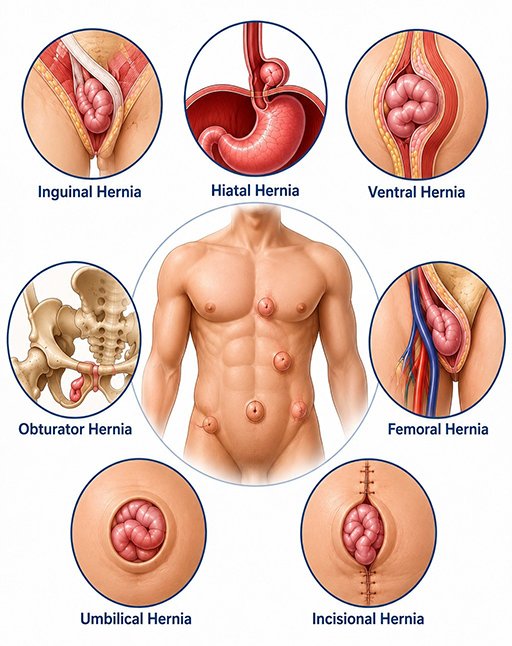
Types of Hernias

Not all hernias are the same. The location and cause of the hernia often determine the symptoms and treatment approach.

Inguinal Hernia

The most common hernia I diagnose and treat, developing in the groin when intestine or fatty tissue pushes through a weak spot in the lower abdominal wall. Patients often notice a bulge that becomes more prominent while standing, coughing, or lifting. Men are significantly more prone to inguinal hernias due to natural anatomical differences. Modern laparoscopic and robotic techniques allow repair with excellent outcomes and quick recovery.

Hiatal Hernia

Unlike other hernias, a hiatal hernia doesn't usually present as a visible lump. It occurs when part of the stomach moves upward through the diaphragm into the chest cavity. Many patients present with acid reflux, heartburn, chest discomfort, or difficulty swallowing without realizing a hiatal hernia is the cause. Treatment may involve lifestyle changes, medication, or surgery, depending on severity.

Ventral Hernia

Develops in the front abdominal wall when tissue protrudes through a weakened area of the abdominal muscles, often along the midline. Patients report a noticeable bulge, discomfort during activity, or pressure. Large ventral hernias may require advanced abdominal wall reconstruction, and robotic surgery has significantly improved precision for these complex repairs.

Obturator Hernia

A rare but serious hernia occurring deep within the pelvis. Because it doesn't typically create a visible bulge, diagnosis can be challenging. It may present as unexplained pain in the inner thigh, groin, or pelvis due to nerve pressure. More common in elderly, thin women, and often require prompt surgical intervention because of their high risk of intestinal obstruction.

Femoral Hernia

A femoral hernia develops just below the groin crease, where tissue passes through the femoral canal. Less common than inguinal hernias but carries a higher risk of becoming trapped or strangulated. A persistent lump near the upper thigh or groin, especially if painful, should not be ignored. Early diagnosis and surgical treatment are important to prevent serious complications.

Umbilical Hernia

An umbilical hernia occurs when tissue pushes through a weak area around the belly button. In infants, these hernias are common and often resolve naturally as the abdominal wall develops. In adults, however, they are more likely to persist and may gradually enlarge over time. Obesity, pregnancy, and increased abdominal pressure are common contributing factors.

Incisional Hernia

Incisional hernia develops at the site of a previous abdominal surgery. Even after successful healing, a surgical incision can remain a lifelong area of weakness. When pressure builds inside the abdomen, tissue may eventually protrude through that weakened scar. I commonly see incisional hernias in patients who have undergone prior abdominal procedures, particularly when obesity, infection, smoking, or heavy lifting affect healing. Modern laparoscopic and robotic techniques have significantly improved management, even in complex cases.

Common Symptoms

Symptoms vary depending on type and size. Some patients experience no discomfort at all, while others develop significant pain and lifestyle limitations.

  • A visible lump or bulge in the abdomen or groin
  • Pain or discomfort during lifting, coughing, or exercise
  • A sensation of heaviness or pressure
  • Burning or aching around the hernia site
  • Swelling that becomes more noticeable while standing
  • Acid reflux and heartburn (hiatal hernias)

When Does a Hernia Become a Medical Emergency?

A hernia may become incarcerated when tissue becomes trapped and cannot be pushed back into the abdomen. If the blood supply to that trapped tissue becomes compromised, the hernia becomes strangulated. This is a serious condition that requires immediate surgical treatment.

Medical Emergency?

Seek emergency care immediately if you experience:

  • Sudden severe pain
  • Nausea/Vomiting
  • Fever
  • Inability to pass gas

In these situations, do not delay emergency medical attention.

How Is Hernia Diagnosed?

In many cases, a hernia can be diagnosed through a detailed physical examination. Patients are often asked to stand, cough, or gently strain, as this increases abdominal pressure and makes the hernia easier to identify.

When additional information is needed:

  • Ultrasound: For smaller or uncertain hernias
  • CT scan: For larger or more complex abdominal wall defects
  • Endoscopy / barium swallow: For hiatal hernias, to assess the stomach and esophagus

Accurate diagnosis is essential to determine the safest, most effective treatment strategy.

Hernia Treatment Options

Treatment depends on the type of hernia, severity of symptoms, and overall patient health.

  • Watchful Waiting: Not every hernia requires immediate surgery. Small, asymptomatic hernias may sometimes be monitored carefully through regular follow-up visits. However, patients must understand that the defect itself will not heal naturally.
  • Medical Management (Hiatal Hernias) Many hiatal hernias can initially be managed with lifestyle changes and acid-reducing medication. Weight management, dietary changes, and avoiding late-night meals often provide significant relief.
  • Laparoscopic and Robotic Hernia Surgery For most symptomatic hernias, surgery remains the definitive treatment. Modern minimally invasive surgery techniques allow repair through small incisions with less pain, reduced scarring, lower infection risk, and faster recovery compared to open surgery.
  • Robotic technology further enhances precision, especially for complex abdominal wall reconstructions and recurrent hernias. These advancements allow surgeons to perform highly accurate repairs while preserving surrounding tissues.

The Role of Surgical Mesh

Rather than stitching weakened tissue together under tension, mesh reinforces the abdominal wall. Over time, the body's tissue integrates with the mesh, creating a stronger, more durable repair and significantly reducing the risk of recurrence when used appropriately.

Know more about your surgical options: Laparoscopic Surgery Robotic Surgery

Recovery & Aftercare

Recovery time depends on the type of hernia, surgical approach (laparoscopic, robotic, or open), and the patient's overall health.

Laparoscopic / Robotic Repair
  • Most patients go home the same day or after one night in hospital
  • Light activity typically resumes within a few days
  • Most people return to desk work within some days
  • Heavy lifting and strenuous exercise are usually restricted for some weeks
Open Hernia Repair
  • Typically requires a longer hospital stay and recovery period
  • Return to normal activity may take [X weeks]
General post-operative guidance:
  • Follow all wound care instructions to reduce infection risk
  • Avoid heavy lifting and straining during the healing period
  • Gradually resume activity as advised by your surgeon
  • Attend all follow-up appointments to monitor healing
  • Contact your surgical team promptly if you notice increasing pain, redness, fever, or swelling at the incision site

Every patient's recovery timeline is different, your surgeon will give you a personalized recovery plan based on your procedure and health history.

Can Hernias Be Prevented?

While not all hernias can be prevented, certain habits can help reduce risk:

  • Maintain a healthy weight
  • Avoid smoking
  • Treat chronic coughs
  • Prevent constipation
  • Use proper lifting techniques

These measures are especially important for those with a family history of hernias or those recovering from abdominal surgery.

Ready to Get Evaluated?

If you are experiencing symptoms of a hernia, or have already been diagnosed and are exploring treatment options, early evaluation leads to better outcomes and simpler procedures.

Dr. Mahak Bhandari's OPD Locations

Bhandari Hospital & Research Center, Indore

OPD Timings: 04:30 PM - 07:00 PM (Mon-Sat)

Address: 21-23, Scheme No. 54, Opp. Meghdoot Garden, Vijay Nagar, Indore (452010), MP

Jain Diwakar Sri Aurobindo Hospital, Ratlam

OPD Timings: 10:00 AM - 01:00 PM (Friday)

Address: Sagod Rd, Ratlam, Madhya Pradesh 457001

Talk to me?